The Hidden Link Between Bedroom Light and Weight
This page may contain affiliate links. We may earn a small commission if you purchase through these links—at no extra cost to you.
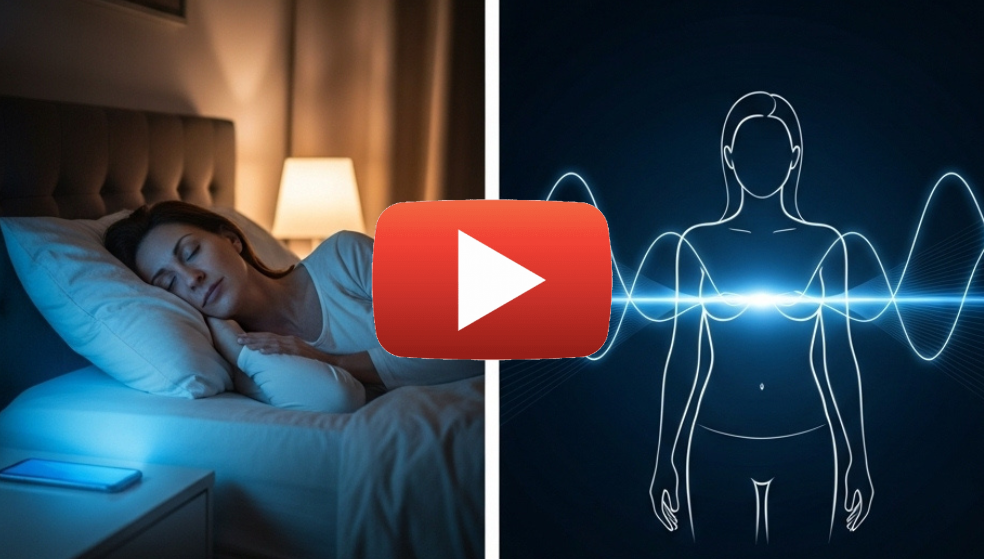

Every night, millions of people fall asleep with their cell phone emitting artificial light, the TV flickering in the background, or a bedside lamp glowing softly.
It seems harmless enough.
But what if something as simple as the light in the bedroom could be quietly influencing weight?
People between the ages of 35 and 74 who have struggled with their weight despite trying different approaches may be surprised to learn that their sleep environment could be playing a role they haven’t considered.
What Researchers Discovered About Light and Weight
In a groundbreaking study published in JAMA Internal Medicine in 2019, researchers from the National Institutes of Health followed over 43,000 women for more than five years. What they found was eye-opening.
The Blue Light Factor
The researchers discovered that women who slept with artificial light present in their room showed a significantly higher likelihood of weight gain compared to those who slept in complete darkness.
Specifically, women who dozed off with a television or light on in the room were 17% more likely to have gained 11 pounds or more during the follow-up period.
But here's what makes this particularly interesting: the association wasn't just about getting poor sleep.
Even when researchers accounted for sleep quality and duration, the connection between light exposure at night and weight changes remained.
Understanding What Might Be Happening in Your Body
Scientists believe that artificial light at night could disrupt body's natural rhythms in several ways.
The body produces melatonin when it’s dark, a hormone that not only helps with sleep but may also play a role in how the body manages weight.
Light exposure could suppress this natural melatonin production.
Additionally, the circadian rhythm—the body’s internal 24-hour clock—relies on light and darkness cues.
When these signals get mixed up, they may affect various processes in the body, including how the body stores and uses energy.
Natural Approaches That Research Suggests Might Help
Supporting Quality Sleep Naturally
Beyond addressing your light environment, researchers have explored various natural approaches that might support better sleep quality. A 2011 study published in Menopause journal examined valerian root extract in postmenopausal women experiencing sleep difficulties. The researchers found that participants taking 530 mg of valerian extract twice daily showed meaningful improvements in their sleep quality compared to those taking a placebo.
Blood Sugar Balance and Sleep
Recent research from 2022 published in Metabolites explored how spirulina might influence post-meal blood sugar responses. In their trials with healthy adults, scientists observed that higher doses of spirulina (8 grams) appeared to support more balanced blood sugar levels after consuming glucose. They also noted a modest reduction in systolic blood pressure measurements.
What's particularly relevant for women in their 30s, 40s, 50s, and beyond is that sleep challenges often increase with age, and the relationship between sleep quality and weight management becomes even more complex during these years.
Creating Your Optimal Sleep Environment
Based on what research has shown, consider these adjustments to your bedroom:
The simplest change might be the most impactful—making your bedroom as dark as possible. This means turning off televisions, covering digital clocks, using blackout curtains if streetlights shine through your windows, and avoiding bright bathroom lights if you wake during the night.
Small nightlights, interestingly, weren't associated with the same weight concerns in the research, so if you need a dim light for safety or comfort, that appears to be a reasonable option.
The Bigger Picture of Sleep and Weight
What makes this research compelling is that it points to something modifiable in your environment. While you can't always control stress levels, work schedules, or family demands, you can control whether your bedroom is dark at night.
Of course, light exposure is just one piece of the puzzle when it comes to weight and health. A balanced approach that includes mindful eating, regular movement, stress management, and quality sleep all work together.
For many women juggling careers, family responsibilities, and personal health goals, discovering that something as straightforward as bedroom darkness could play a role in weight management offers a fresh perspective. It suggests that sometimes the solutions we're looking for might not require dramatic lifestyle overhauls—just thoughtful adjustments to the environment we create for rest and recovery.
Write your text here... Association of Exposure to Artificial Light at Night While Sleeping With Risk of Obesity in Women https://jamanetwork.com/journals/jamainternalmedicine/fullarticle/2735446
Short-Term Effects of Spirulina Consumption on Glycemic Responses and Blood Pressure in Healthy Young Adults: Results from Two Randomized Clinical Trials
https://www.mdpi.com/2218-1989/12/12/1180#Conclusions
Effect of valerian on sleep quality in postmenopausal women: a randomized placebo-controlled clinical trial.
Contact
Reach out to our DMCA agent via email.
Connect
Stay updated with nourishing tips and stories
Contact
Subscribe
hello@nourishedflow.com
555-123-4567
© 2025. All rights reserved.
FDA Disclaimer
Results are not typical for everyone. Hoping you come across the solution that's just right for you.
Nothing on our website has been evaluated by the FDA or other medical bodies.
We're here to share educational wellness insights, not to diagnose, treat, cure, or prevent any health condition.
Think of our content as inspiration and information to discuss with your healthcare provider—not as a replacement for professional medical advice.
If you have any health concerns, are pregnant, nursing, taking medications, or managing a medical condition, please chat with your doctor before making changes based on anything you read here.
Your health is unique to you, and your healthcare team knows you best.
We're just here to support your journey with research-backed information and encouragement.
Stay well! 💚