What the Research Says About Slow Jogging at 180 Steps Per Minute (And Why Women Over 35 Are Paying Attention)
Discover the Japanese running method that prioritizes sustainability over speed—and what the science actually says about it.
12/10/20253 min read
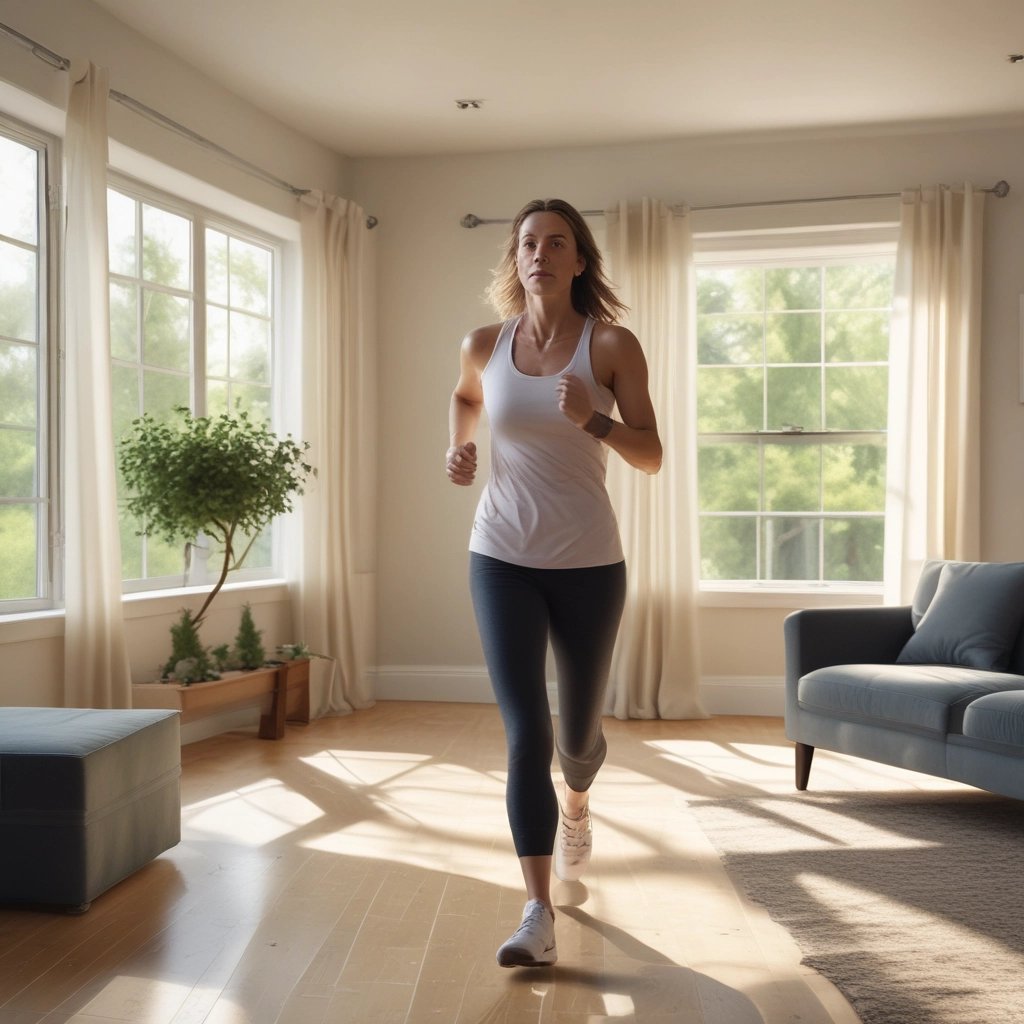
Your knees hurt after a run.
You try to jog at the park and feel winded after five minutes.
You wonder if running just isn't for you anymore.
Here's what the research suggests: you might be running too hard.
What Slow Jogging Actually Is
Slow jogging comes from Japan.
Dr. Hiroaki Tanaka developed the method decades ago.
The concept is simple: run at a conversational pace while maintaining 180 steps per minute.
The key differences from regular jogging:
Much slower pace (you can chat comfortably)
Higher step frequency (180 steps per minute)
Lower impact on joints
Easier to sustain over time
Think of it as quick, light steps instead of long strides.
Your feet spend less time on the ground with each step.
The 180 steps per minute rhythm has been recognized as an ideal running cadence by many running experts, though individual needs vary.
What the Research Shows
Studies on slow jogging suggest some promising patterns.
A 12-week study on adults aged 65-84 found that short-interval, low-intensity slow jogging may improve skeletal muscle and fitness markers.
The participants showed measurable changes in body composition and physical function.
Research published on ResearchGate describes slow jogging as a "multi-dimensional approach to physical activity."
The method emphasizes sustainability over intensity.
What this might mean for you:
The approach may support cardiovascular health at lower intensities than traditional running.
Joint impact appears reduced compared to standard jogging techniques.
The method may be easier to maintain long-term because it doesn't leave you exhausted.
Your body may use fat for fuel more efficiently at slower paces.
Recovery time between sessions may be shorter.
The limitations:
Most studies have small sample sizes.
Individual results vary widely.
Long-term data remains limited.
The method requires patience and consistency.
Why This Might Appeal to You After 35
You have about 47 things on your to-do list today.
Exercise needs to fit into your life, not dominate it.
Here's what makes slow jogging practical:
Time efficiency — A 20-minute session counts. No need for hour-long workouts.
Joint considerations — The lighter impact may reduce stress on knees and ankles.
Accessibility — No gym membership needed. No special equipment beyond decent shoes.
Realistic entry point — You can start regardless of current fitness level.
Schedule flexibility — Early morning. Lunch break. Evening. Your choice.
The barrier to start is low.
The ceiling for improvement is high.
You can do it almost anywhere.
Before You Start: What to Consider
Talk to your doctor first.
This isn't negotiable if you have existing health conditions.
Starting guidelines:
Begin with 10-minute sessions if you're new to running.
Find your natural pace by talking out loud while jogging.
If you can't speak in complete sentences, you're going too fast.
Track your steps per minute using your phone or watch.
Most fitness trackers measure cadence automatically.
Equipment needs:
Decent running shoes (not necessarily expensive ones).
Comfortable clothing.
A way to track time and steps.
That's it.
Managing expectations:
Progress happens slowly.
You might feel awkward at first.
The quick steps may feel unnatural initially.
Your pace will likely seem embarrassingly slow.
That's the point.
Free Apps for 180 Steps Per Minute
Several free apps can help you maintain the 180 step rhythm:
Quick Steps (iOS) — Plays a beat at 180 steps per minute. Free version works perfectly for slow jogging.
Slow Jogging Tracker & Timer (Android) — Includes 180 BPM beat music and step counter.
Running Metronome & Timer (Android) — Offers beat-driven tracks at 180 BPM and beyond.
Your existing fitness tracker — Most Garmin, Apple Watch, and Fitbit devices already track cadence automatically.
You can also search music streaming services for "180 BPM" playlists.
Match your steps to the beat.
The rhythm helps maintain consistency.
The Truth About Starting
Your first few sessions will feel strange.
The pace will seem too slow.
The quick steps will feel awkward.
You might wonder if you're doing it wrong.
You probably aren't.
The method requires trust in the process.
Results come from consistency, not intensity.
Weeks matter more than individual sessions.
Your move:
One 10-minute session this week.
Just one.
See how your body responds.
Then decide if it's worth exploring further.
The research suggests it might be.
Your experience will tell you if it is.