What Your Body Already Knows About Stress (That Your Mind Keeps Ignoring)
Three Things You Can Do in Under Five Minutes (That Actually Work With Your Biology)
12/10/20253 min read
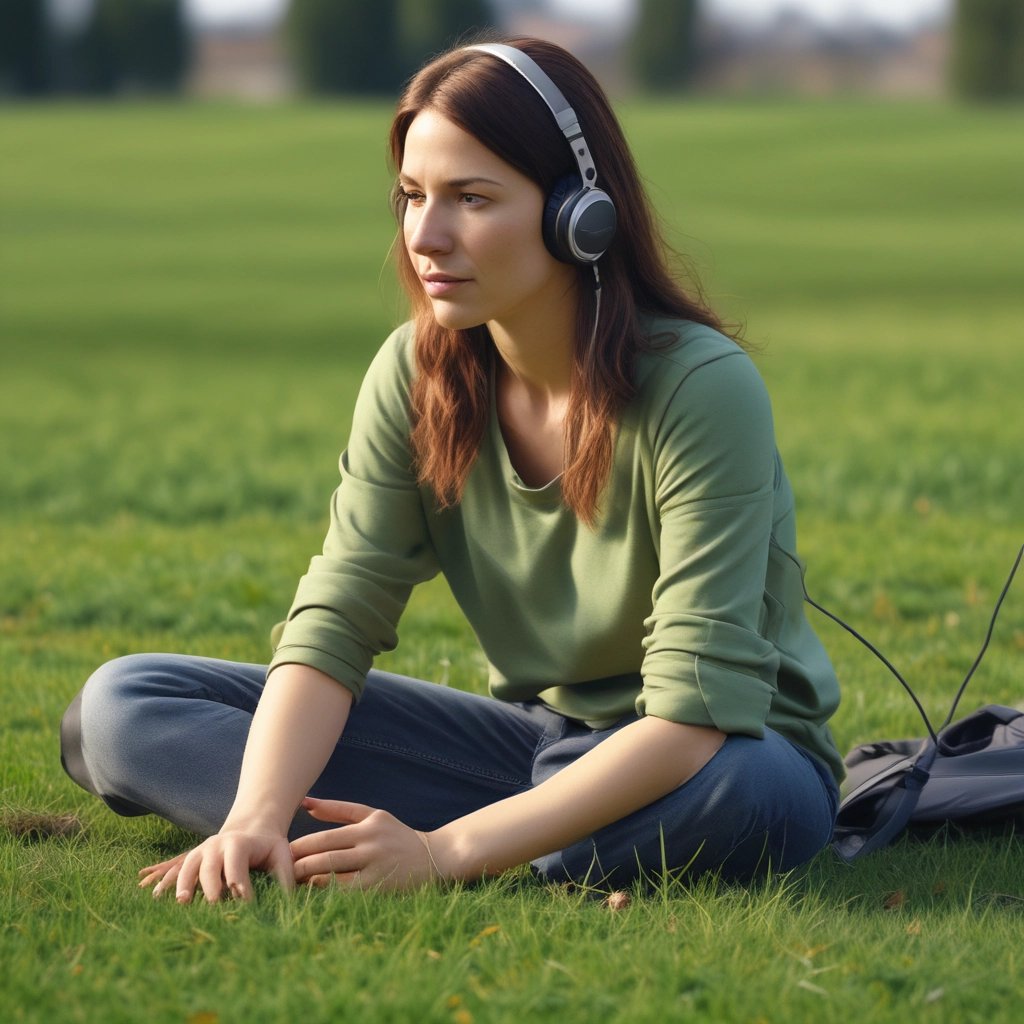
You're standing in your kitchen at 9 PM.
The dishes are piled up.
Your phone is buzzing.
And you're reaching for the snack drawer again.
Not because you're hungry.
Because you're wired.
Here's what most wellness advice won't tell you: your nervous system doesn't care about your to-do list.
It only knows one thing—threat or safety.
And right now, it thinks you're being chased by a bear.
Three Things You Can Do in Under Five Minutes
Forget the bubble baths and the meditation apps you never open.
These methods work with your body's existing wiring, not against it.
1. Hum Like Nobody's Listening
Close your mouth.
Make a low humming sound for 30 seconds.
That's it.
The vibration may stimulate your vagus nerve, which signals your body to shift from fight-or-flight mode into a calmer state, according to research published in Frontiers in Psychology.
The vagus nerve connects your brain to your digestive system, heart, and other organs, playing a key role in stress response regulation.
You can do this while folding laundry.
While sitting in traffic.
While pretending to listen to another Zoom call.
Your cortisol levels may drop.
Your heart rate may slow.
And that grip on the cookie jar may loosen.
2. Put Your Bare Feet on the Ground
Walk outside.
Take off your shoes.
Stand on grass, soil, or concrete for two minutes.
This practice—called grounding or earthing—may reduce inflammation and improve sleep quality, based on findings in the Journal of Inflammation Research.
Direct physical contact with the earth's surface electrons may influence physiological processes, including those related to stress and inflammation.
No app required.
No subscription needed.
Just you and the planet you've been standing on your whole life.
3. Listen to Water (Real or Recorded)
Find a recording of rain, ocean waves, or a stream.
Play it for five minutes.
Natural soundscapes may reduce stress and improve cognitive performance by lowering sympathetic nervous system activation, per research in Scientific Reports.
The rhythm matters.
Your brain syncs to it.
Your breathing slows to match.
And suddenly, the mental chatter dims.
You can pair this with your morning coffee.
With your evening skincare routine.
With the three minutes you have before someone needs something from you again.
Why This Matters for Your Body (Not Just Your Mind)
Chronic stress isn't just exhausting.
It may increase cortisol levels, which can promote abdominal fat storage and appetite dysregulation, according to studies in Psychoneuroendocrinology.
Translation: stress makes your body hold onto weight.
Not because you're weak.
Because you're human.
Your body is doing exactly what it evolved to do—prepare for famine when it senses danger.
The snacking isn't the problem.
The survival mode is.
The Truth Nobody Posts on Instagram
You don't need an hour.
You don't need equipment.
You don't need to be "good at" relaxation.
You need 90 seconds of humming.
Two minutes with bare feet on earth.
Five minutes of water sounds.
That's 8.5 minutes total.
Less time than scrolling through your feed.
Less time than one episode of anything.
These methods won't fix everything.
They won't erase your deadlines or your responsibilities.
But they may give your nervous system proof that you're safe.
Right now.
In this moment.
And sometimes, that's enough to break the cycle.
Your Move
Pick one method.
Try it tomorrow morning.
Before coffee, before phones, before the day swallows you whole.
Your body's been waiting for you to listen.
Sources:
Gerritsen RJS, Band GPH. Breath of Life: The Respiratory Vagal Stimulation Model of Contemplative Activity. Front Psychol. 2018;9:2569.
Oschman JL, Chevalier G, Brown R. The effects of grounding (earthing) on inflammation, the immune response, wound healing, and prevention of chronic inflammatory and autoimmune diseases. J Inflamm Res. 2015;8:83-96.
Gould van Praag CD, et al. Mind-wandering and alterations to default mode network connectivity when listening to naturalistic versus artificial sounds. Sci Rep. 2017;7(1):45273.
Hewagalamulage SD, Lee TK, Clarke IJ, Henry BA. Stress, cortisol, and obesity: a role for cortisol responsiveness in identifying individuals prone to obesity. Domest Anim Endocrinol. 2016;56 Suppl:S112-S120.